
PUSH BACK PALLET RACKING
Push-Back Pallet Racking: High-Density Storage with LIFO Operation
Push-back pallet racking is a dynamic warehouse storage system that offers excellent capacity and improved selectivity compared to drive-in racking. Similar in structure to FIFO live storage systems, push-back racking operates on the LIFO (Last In, First Out) principle. This makes it an ideal choice for bulk storage of non-perishable goods where full stock rotation is not essential.
How Push-Back Racking Works
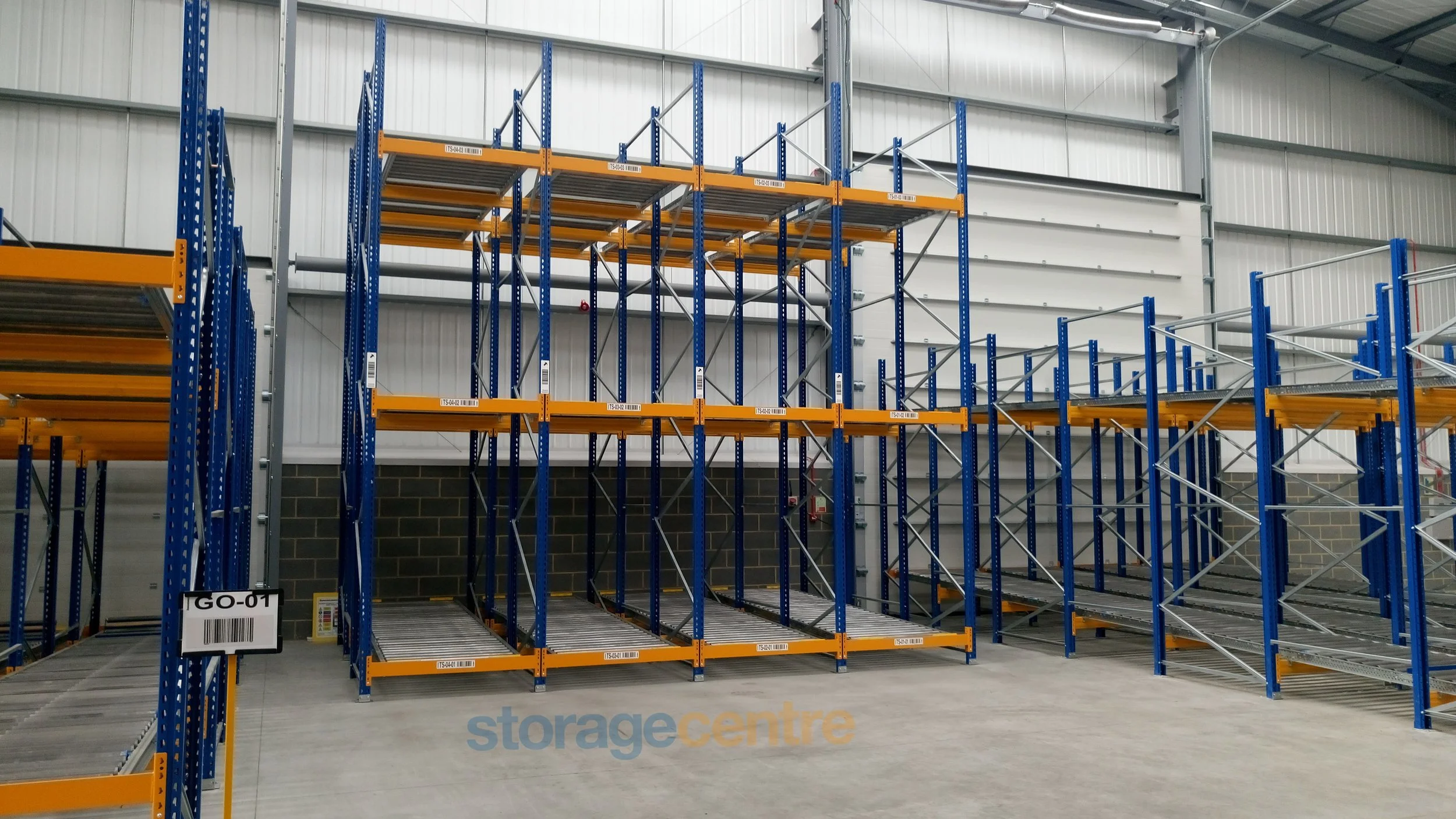
In this system, pallets are loaded from the front of the racking lane. Each new pallet pushes the previous one backwards, allowing multiple pallets to be stored within the same lane. When a pallet is retrieved, the remaining pallets automatically move forward, ready for collection.
Push-back racking can be configured with either roller beds or trolley (cart) systems:
Trolleys can store up to six pallets deep, depending on the type and design of pallets used.
Roller systems can store up to 26 pallets deep, often incorporating two-way braked rollers to safely control pallet movement.

Forklift Compatibility and Safety
It’s important to consider the line pressure created by stored pallets and ensure it is compatible with the type and design of the forklift truck in use. This ensures smooth handling and safe operation.
Increases storage density while maintaining greater pallet selectivity than drive-in racking.
Reduces aisle requirements, maximising available warehouse space.
Suitable for multiple product lines and medium-turnover stock.
Flexible system adaptable for different pallet types and storage depths.
Advantages of Push-Back Pallet Racking
Applications
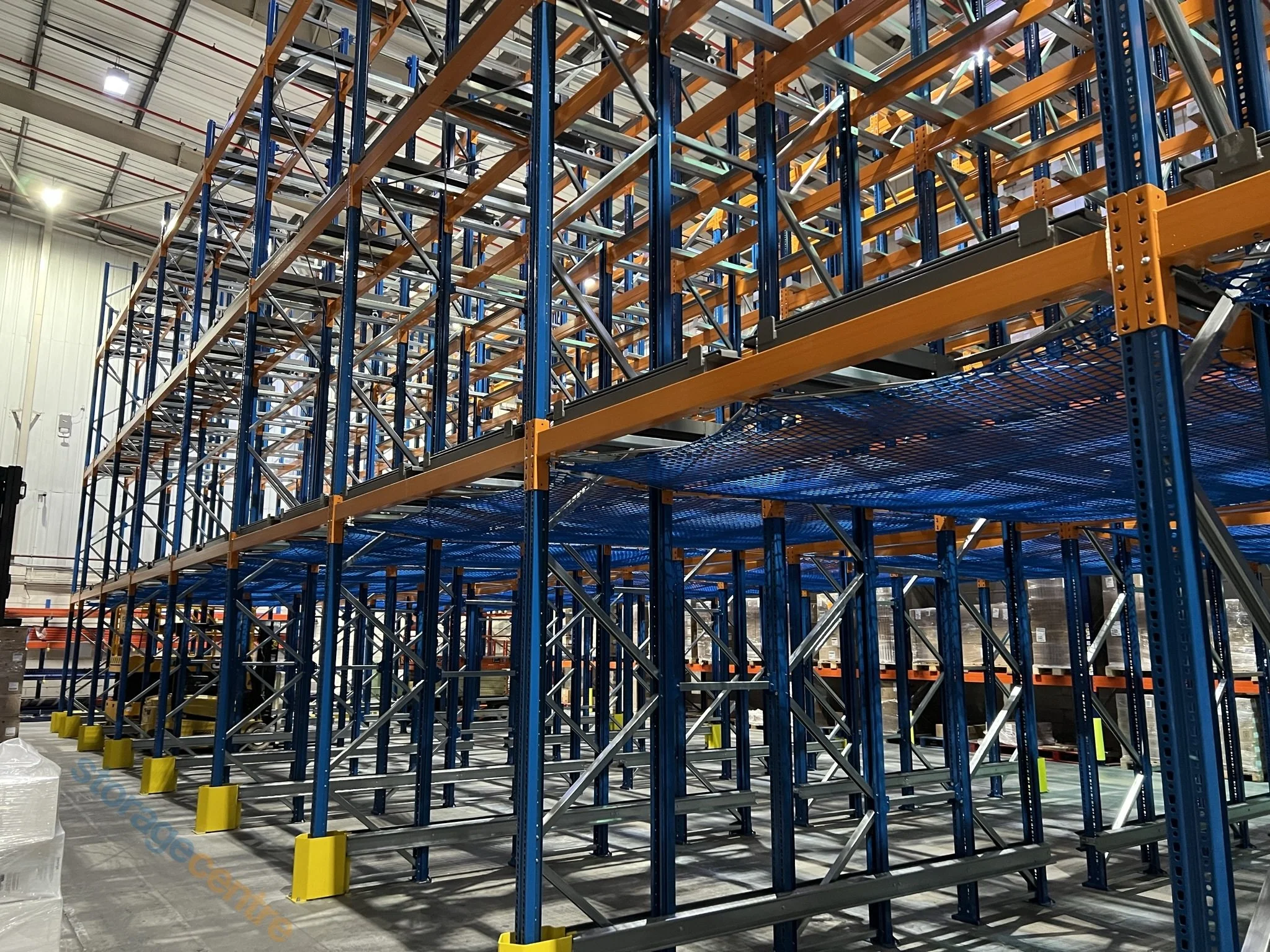
Push-back pallet racking is well-suited for warehouses, manufacturing facilities, and distribution centres requiring high-density storage with improved selectivity. By combining efficiency with versatility, push-back systems offer a durable, space-saving solution for modern warehouse operations.